Therapies
At Auditory Processing Services we offer our clients a range of evidence-based therapies to help adults and children manage their listening difficulties. We believe that no matter what age a person is, diagnosis can be validating and therapy can be life-changing, giving a person the best opportunity to succeed. We specialise in a range of therapies and long-term solutions including Auditory Training, Interactive Metronome (IM), Safe and Sound Protocol (SSP) and Tinnitus Retraining Therapy (TRT).
-

Auditory Training Therapy
Auditory training therapy focuses on decoding, listening in noise, organisation, dichotic listening, short term and working memory and auditory integration skills.
-

Interactive Metronome (IM)
Interactive Metronome is used to improve integration and neural synchronization skills. It is recommended to address temporal processing deficits and improve auditory response time.
-

Safe and Sound Protocol (SSP)
We can strengthen the hearing brain with music. Safe and Sound Protocol uses specially filtered music to help regulate the nervous system, reducing stress and anxiety for people with APD.
-

Treatment for Tinnitus and Sound Intolerances
The experience of Tinnitus and sound intolerance (hyperacusis/misophonia) can be very stressful. There are treatment options to help regain comfort, control and peace.
Auditory Training Therapy
-
Auditory training therapy is an evidence-based therapy where we work on decoding, listening in noise, organisation, dichotic listening, short term and working memory and auditory integration skills.
-
Auditory Training Therapy is ideal for any adult or child who has been diagnosed with Auditory Processing Disorder (APD), also known as Central Auditory Processing (CAP) Disorder.
-
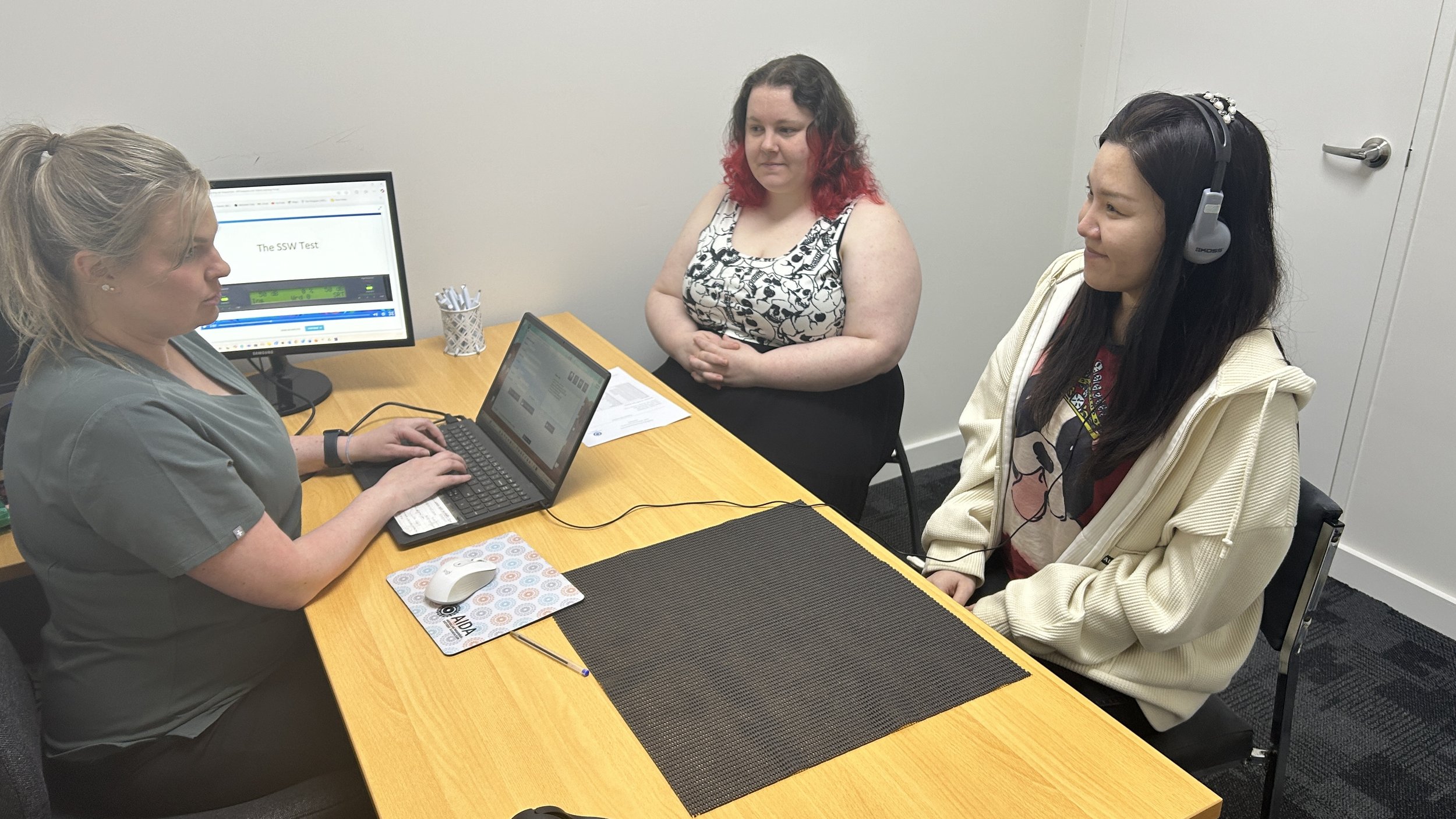
Auditory training therapy consists of 12-14, 45-minute sessions that take place over 14 weeks.
Testing and therapy can be online or face-to-face at our Hobart clinic located in Kingston.
When undertaking online testing and therapy for children we do like a parent nearby to assist if necessary.
Testing is repeated at the end of the 14 week therapy period to measure overall progress.

Interactive Metronome (IM)
-
Interactive Metronome (IM) is a therapy that trains neural rhythm and timing in the brain and body. It uses rhythmic sounds and movements to help train the brain’s ability to process and respond to auditory information and improve temporal processing. At Home IM devices are available so clients can do these exercises at home.
-
Interactive Metronome (IM) is recognised as a therapy that can help children with auditory processing disorder, ASD, ADHD, specific learning disorders, sensory processing disorders and more. It is a useful complement to other therapies or treatments, such as speech therapy or occupational therapy.
-
Supported by more than 20 years’ research, IM can lead to improved Temporal Processing ability and support improvements in overall academic results, reading comprehension and speech fluency, handwriting, organisation, behaviour, self-esteem, coordination and sport performance.
Overall, Interactive Metronome is a fun way to help clients improve their coordination and sensory processing skills, which can have a positive impact on their overall quality of life.
-
More information about Interactive Metronome is available here: https://www.interactivemetronome.com/

Safe and Sound Protocol (SSP)
-
Safe and Sound Protocol (SSP) therapy is a non-invasive intervention for sound intolerance. It is an evidence-based tool to help decrease auditory sensitivities and improve emotional and nervous system regulation.
There are many published studies that support this as a therapeutic tool for vagal nerve stimulation. It works well with and complements other therapies.
The Safe and SoundProtocol is based on the work by Dr Stephen Porges’ Polyvagal Theory.
The goals of the program are to improve social skills and social engagement, improve auditory processing and listening skills and to reduce anxiety by enabling the client to hear higher pitched sounds which we recognise as ‘cues of safety’.
-
Children with conditions such as: Autism Spectrum Disorder, ADHD, auditory processing disorder and anxiety or early childhood trauma are often great candidates for the program and research shows children seem to benefit greatly when the SSP is used in conjunction with other therapies such as auditory training therapy, OT and speech therapies.
-
Throughout the 5-hour SSP program, a person listens to special music for 1 hour or less per day in a quiet and relaxed home environment whilst being supervised by a parent or caregiver.
During SSP therapy, clients listen to a series of specially designed music tracks, which are designed to stimulate the vagus nerve, a key component of the parasympathetic nervous system responsible for regulating the body's stress response.
SSP is non-invasive and can be done in the comfort of the client's home, making it accessible and convenient for many people.
-
The goals of the SSP program are to improve social skills and social engagement, improve auditory processing and listening skills and to reduce anxiety by enabling the client to hear higher pitched sounds which we recognise as ‘cues of safety’.
SSP is designed to:
regulate the nervous system, reducing stress and anxiety.
help to calm the body and mind, leading to improved emotional regulation and social engagement.
help to balance the autonomic nervous system, which can lead to improved attention, focus, emotional regulation, and social engagement.
Overall, SSP is a safe and effective therapy that can help clients reduce stress and anxiety, improve emotional regulation, and increase social engagement.
-

Tinnitus Retraining Therapy (TRT)
TRT was developed by Dr Jastreboff. It is a method of habituating the brain’s response to tinnitus. TRT is designed to help clients manage tinnitus by reducing their emotional response to the sound, allowing them to live more comfortably with it. TRT is considered effective, has no side effects, and is implemented over a finite period of time. TRT can also provide relief from other related conditions such as hyperacusis and misophonia.
Most people will experience tinnitus at some point in their lives, but for about 2% of the total population, their tinnitus can be distressing. For people with chronic tinnitus (lasting for more than 6 months), TRT is available at our clinic. This treatment is a combination of sound therapy and counselling aimed at retraining the brain to stop focusing on the tinnitus sound i.e. habituation.
This form of treatment, (based on the neurophysiological model of tinnitus) is considered to have the highest success rate of 80%. When clients understand what is happening in the brain to cause tinnitus and sound intolerances, they have a better chance of overcoming it.
There are many other treatments available for treating tinnitus including lifestyle changes, avoiding certain foods, and taking supplements. These have been shown to have a 40% chance of success and research suggests this is due to the placebo effect (which is wonderful if it works!).
TRT treatment can improve and, in some cases, completely relieve bothersome and often painful symptoms associated with Tinnitus. TRT enables a person to improve their quality of life by giving them greater control over their tinnitus symptoms and reduce stress levels associated with them.
Please contact us to discuss.